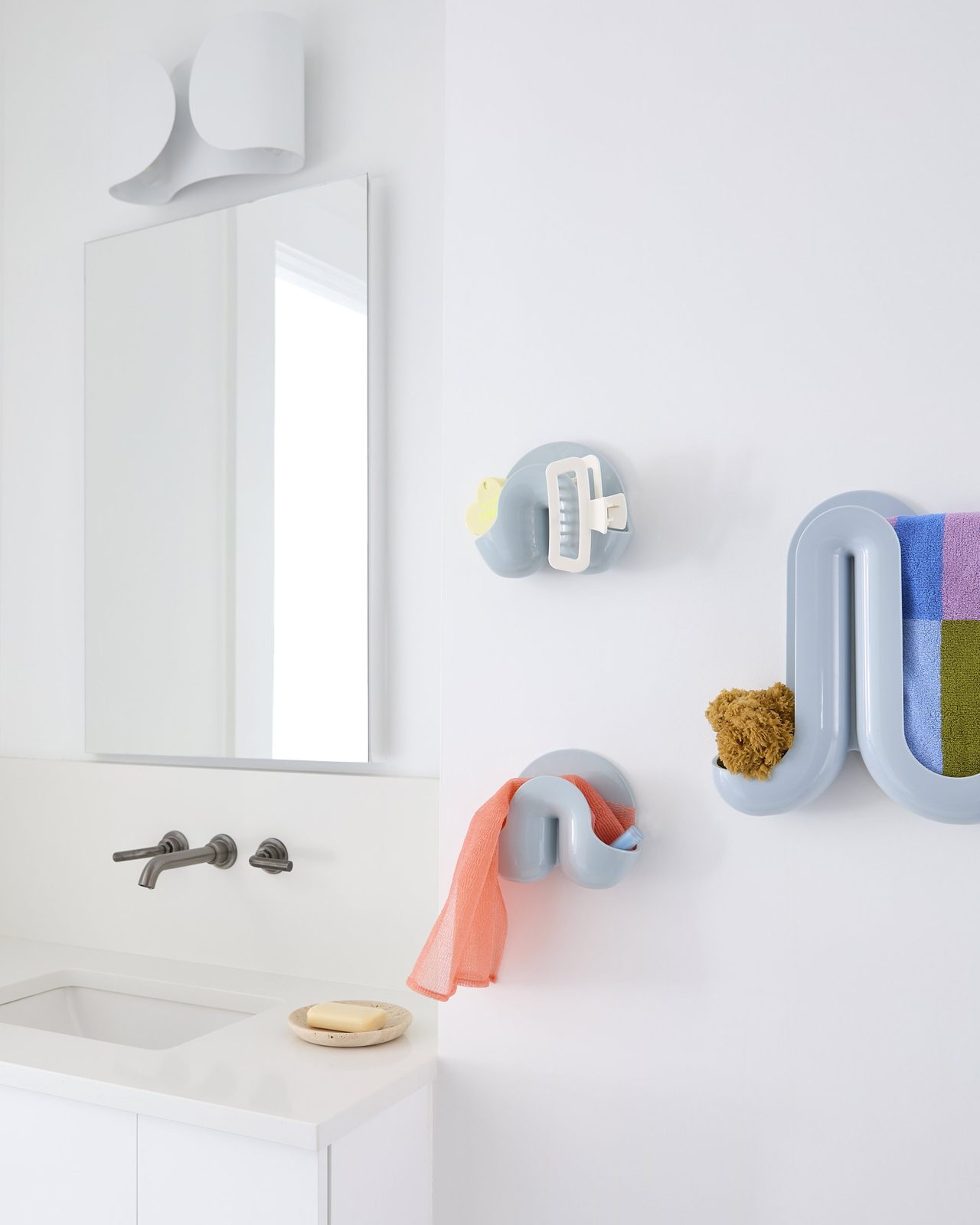
At eight in the morning a kitchen shows its colors honestly. The plates from last night are still on the rack, the coffee is going cold, and the light through the window is the flat, unflattering kind that no room can edit. Whatever color is in that kitchen has to work in that light, at that hour, with those dishes. It is a higher standard than a photograph on a mood board, which is why most color advice for kitchens fails the first Monday test.
The kitchen resists a palette
Painters talk about color in terms of walls; the kitchen has few walls left. Cabinets, countertop, backsplash, floor, appliance fronts — most surfaces are already speaking, and most of them were expensive to choose. Add tableware that wants to be noticed and the room becomes a conversation in which everyone talks at once. The practical move is to leave the large surfaces quiet and put color where it can be changed: at the table, on the shelf, in the hand. It is a rule that applies in most rooms: the smaller the object, the more license it has.
Small objects make color reversible
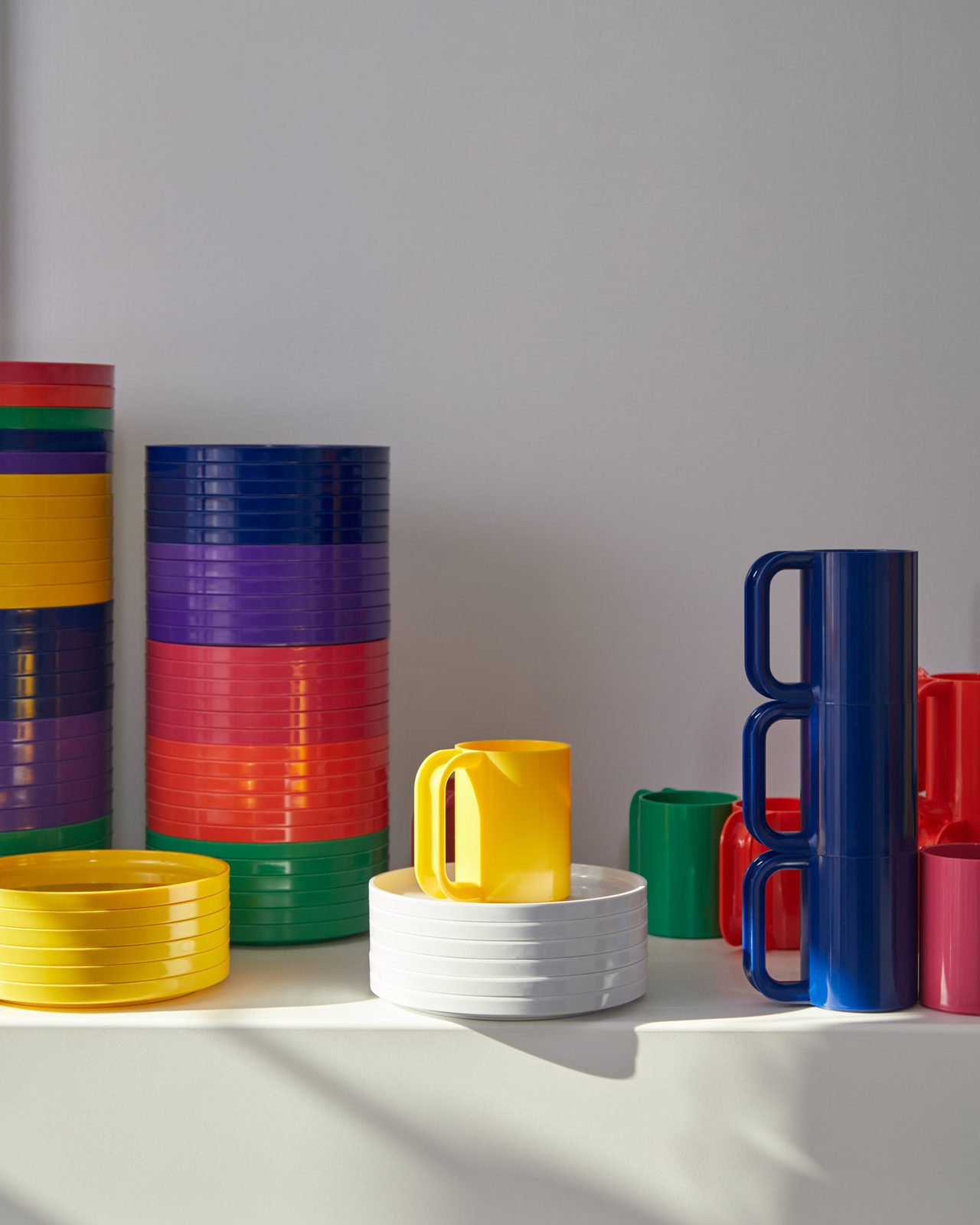
A mug is a color decision that takes one shelf and no contractor. It can be bought in one tone, lived with for a year, and doubled with a second tone without a re-fit. Because melamine is colored through rather than coated, the object holds its tone through dishwashing, and a chip on the rim shows the same color inside. This is not a romantic property. It is the reason a modest material can look considered for a decade. It also means a set can be extended years later without an obvious difference between old and new, which is not true of a painted or glazed surface.
A kitchen does not need a palette. It needs one color that can survive breakfast.
Light before pigment
North light makes warm tones warmer and cool tones colder; a west-facing kitchen at six in the evening turns a clean gray into something closer to stone. Choose colors under the light the room actually has, at the hours the room is actually used. Gloss surfaces pick up reflections and change with every object near them; satin surfaces hold their color more steadily and photograph with less drama. In a small kitchen, a pale interior on a mug makes a dark exterior look deliberate rather than heavy. In a large one, the same two tones read as a pair from across the room.
Two colors, then one
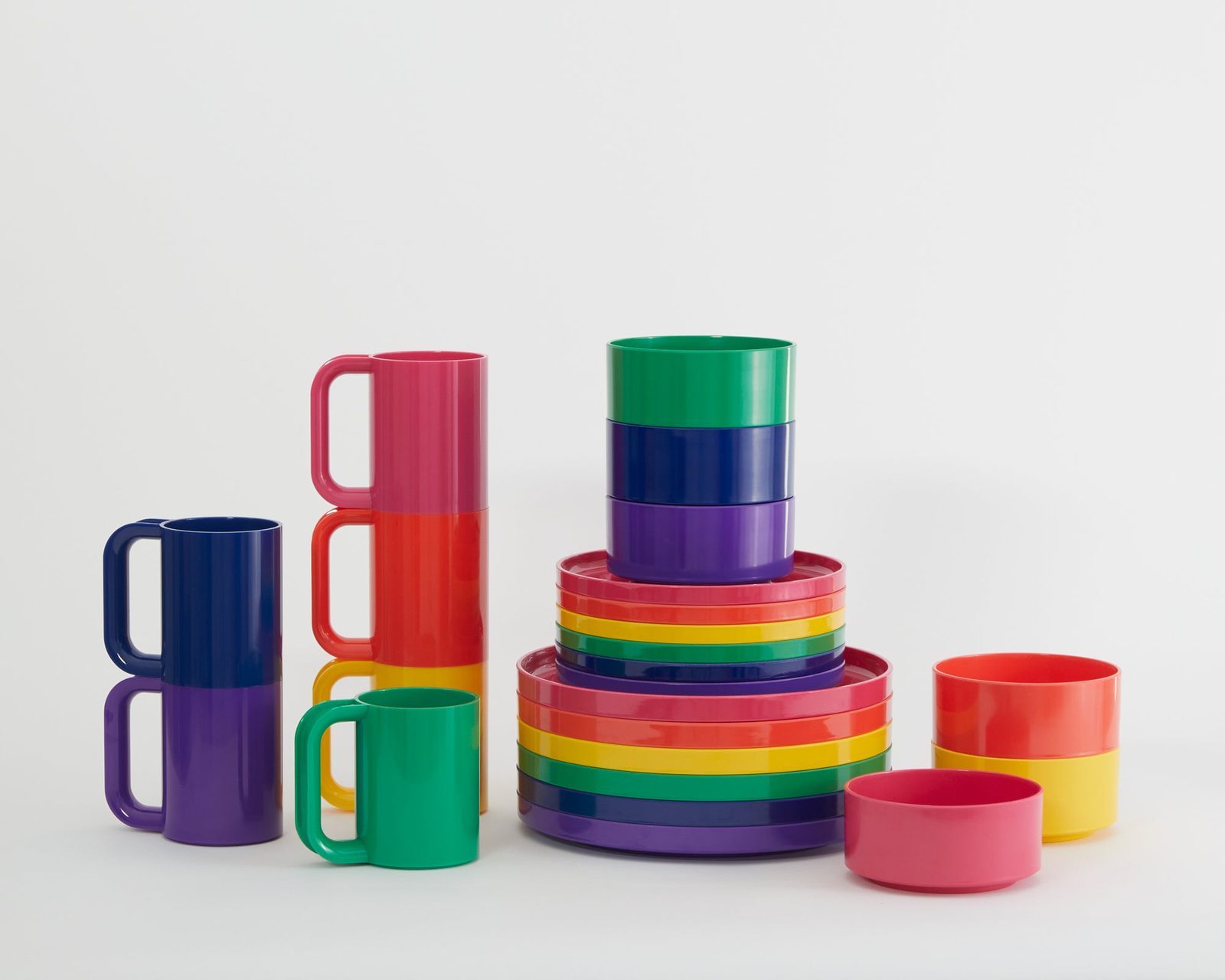
The most reliable kitchen palette is a neutral, a mid-tone and nothing else: chalk and clay, chalk and mist, olive and a lighter neutral. Four mugs in one color and four in another look collected. Six colors look like a promotion. A single tone — all clay, all olive — is not dull; it is a decision that lets the food and the light supply the variation. If a client wants more, add texture before adding another hue. Matte against gloss is a bigger change than a slightly different color. Choose the neutral first, then the color; the reverse order produces a kitchen that is about the color rather than about the room.
What ages well
Color in the kitchen is not maintained, it is lived on. A set that has gone slightly dull through years of top-rack dishwasher cycles is not broken; it is a set with a history. Replacing it should be about loss or damage, not boredom. When the time comes, the old pieces can move to the garden, the rental, the studio. Melamine can be recycled, and the colored-through wall means a scratched mug still holds the tone it was made in, which is the argument for choosing that tone carefully in the first place. A set that has been used is more legible than a set that has been styled.